HOW TO CHOOSE YOUR HEALTH INSURANCE
Husband is not happy. He hates his new job as my proof
reader. He is too busy and I am too pushy. So, if you are interested in this
job (unpaid, of course...I am still not earning a penny from this blog) than please
contact me (Daughter wants this job badly but she is too critical of my writing
skills!!!).
Stock Market is not taking Russia- Ukraine conflict kindly. So,
if you are invested in the market (FYI - Volatility is expected to continue for
some time) and its performance is affecting your health than this post is for
you. (Check your health insurance if you already have one with the below
mentioned points or if you don’t have one yet...what are you doing? Buy one
immediately after reading this post!)
Buying a health insurance is a tricky business (So many
clauses and pages that too in small fonts, who reads them?).

Here are the points (I love making bullet point notes if you don’t already know that) to consider while buying a health insurance.
● Claim settlement time and claim
settlement ratio: Starting
with the hard jargon…Claim settlement time means how fast the insurer settles
claim and claim settlement ratio means how many claims are settled (in percentage)
from total claims made during a particular period. Look for the policy which
has a low claim settlement
time and a very high (preferably > 90%) claim
settlement ratio.
● Co-payment: Co-payment means policyholder
will bear a pre-defined percentage of the claim amount and the rest will be
settled by the insurance company. (Yes, exactly like going Dutch except here
it’s not about a meal expense but your health expense) Do not choose the policies with co-payment clause.
●
Waiting Period: It means waiting period for
pre-existing illnesses and illnesses that
occurs after buying the policy. Who likes waiting, right? (Don’t smirk Husband,
I am worth waiting for 😊) The
policy with lesser waiting period is better (Usual waiting period for existing
illness in health policies are 2 to 3 years).
● Day-care procedures: Check whether one day procedures i.e.,
procedures undertaken without overnight hospitalization are covered. Choose the policy which
covers day procedures (So you don’t have to stay overnight in the hospital
just to get insurance money).
●
Network hospitals: Go over the list of hospitals in
your city which covers cashless transactions
(No, no need to go hospital hopping to check that. You can find the list
online) and choose the policy which covers major hospitals of your city
and some good hospitals in proximity to your residence.
● Pre/Post Hospitalization: This means medical expenses
incurred after and/or before hospitalization (They can be of substantial amount
too). Check the number of days and amount covered during pre/post hospitalization phase, higher is better.

● Lifetime Renewability: Some policies are not renewable beyond certain age. Policy should be lifetime renewable as the requirement of the same would be more in older age.
● Cap on room rate: Cap on room rent means there is limit
on rent paid by insurance company for the hospital room. If room with a higher tariff is
selected then the amount needs to be paid by you. (Insurance companies wants us
to share expenses everywhere. Why are we buying policies then?) Select the policy with no room rent
cap or with cap according to your standard.
● Disease wise Capping: Disease wise capping means limit
on payment (yet again!) some specified
illnesses. Ask for the list before buying the
policy. Compare it with your pre-existing
illnesses, family history, occupational hazards etc and accordingly make
decision.
● Exclusions: Exclusions means illnesses not
covered under policy. Check the exclusion list before finalizing the policy.

●
Family Cover: Rather than buying individual
health insurances for each family member, buy a family floater policy (Daughter
got worried about her health insurance after reading this post so had to add
this point). It will be cheaper.
● Tax
Benefit: You can claim
deduction from your total income under Section 80D for health insurance
premium paid by you for self, spouse, dependent children (Yes Daughter, you are
still dependent...Even though you feel otherwise) and parents.
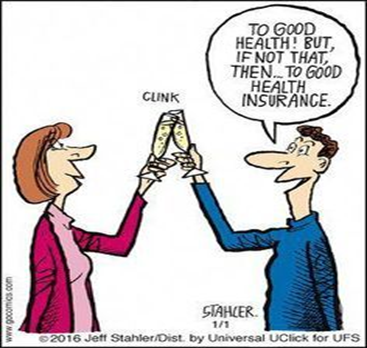
Happy Insurance Shopping (You know whom to contact for an
easier way out)!
-
Foram

Wah, so nicely described with each n every point.
ReplyDeleteThank you Diya!
DeleteQuite informative , keep it up!
ReplyDeleteThank you!
Delete